How States and the UN have Violated International Law Concerning Somaliland
I am writing to the international community to urgently highlight the ongoing breaches of international law, committed by specific states and the UN, in relation to the Republic of Somaliland’s rights and status. These transgressions erode the foundations of sovereignty, self-determination, and legal standards, affecting Somaliland’s inhabitants.
Background:
Somaliland’s Legal Status
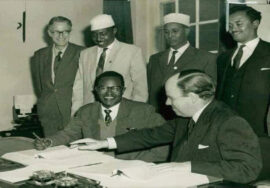
•Somaliland’s Independence: The State of Somaliland gained full independence from the United Kingdom on 26 June 1960. It achieved international recognition from over 30 countries, became part of global treaties, and joined the world’s sovereign nations.
•The Invalid Union: On 1 July 1960, Somaliland entered an invalid union with the Trust Territory of Somalia (formerly Italian Somalia) to form the Somali Republic. International law requires a mutually ratified treaty, but this union never formalized that way. The process had legal asymmetry and didn’t meet treaty formation standards under the Vienna Convention on the Law of Treaties.
•Statehood Continuity: After the Somali Republic fell apart in 1991, Somaliland left the failed union and reaffirmed its sovereignty as a continuation of the State of Somaliland. Rather than a secessionist entity, it is a de jure state that has re-established its independence within the colonial borders recognized in 1960.
International Law Infringements
1. Breach of the Vienna Convention on the Law of Treaties
• Article 27 Violation: States that still consider Somaliland part of Somalia are in breach of Article 27 of the Vienna Convention, because you can’t use internal law as a reason to not fulfill treaty duties. Acknowledging an illegitimate union violates basic treaty law.
•Lack of a Valid Treaty between Somaliland & Somalia: A legal, ratified union agreement is missing, meaning the two states never legally merged under international law.
2. Contravention of the United Nations Charter
•Article 1: The UN Charter affirms the right of peoples to self-determination during the decolonisation. Denying Somaliland’s right to self-determination from UK of 26th June 1960 and state continuity directly contradicts this principle.
•Article 2: The Charter requires respect for sovereign equality and non-interference. Treating Somaliland as part of Somalia without its consent violates these foundational obligations.
3. Disregard for the African Union Constitutive Act
•Article 4(b): The African Union emphasizes respect for borders existing at independence. Somaliland’s borders were clearly defined and recognized at the time of its independence in 1960. Denying this fact undermines the AU’s own legal framework.
•Failure to Uphold Legal Continuity: The AU’s refusal to acknowledge Somaliland’s legal continuity and sovereignty contradicts its commitment to legal order and post-colonial border integrity.
4. Internationally Wrongful Acts and State Responsibility
•Attribution and Violation: Actions and inactions by states and the UN that deny Somaliland’s legal standing are internationally wrongful acts for which they are responsible based on international norms.
•Impact: They’re responsible, must stop the misconduct, guarantee it won’t happen again, and fix the damage.
• Due Diligence: States and international bodies need to apply due diligence, making sure their policies do not result in ongoing violations of Somaliland’s rights or international legal principles.
Human Rights Implications
•Denial of recognition limits Somaliland’s access to international aid, financial systems, and diplomatic engagement.
• It weakens attempts to safeguard civil liberties and human rights in Somaliland by keeping it outside international accountability and support structures.
•The international community’s refusal to acknowledge Somaliland’s legal status perpetuates a humanitarian and legal vacuum that harms its population.
Call to Action
•States and the United Nations must uphold their legal obligations by recognizing the legal continuity and sovereignty of the Republic of Somaliland.
•They must cease supporting or legitimizing an invalid union that has no basis in international law.
•The international community should engage with Somaliland as a sovereign state, in accordance with the principles of international law, the UN Charter, and the African Union Constitutive Act.
•Internationally wrongful acts require accountability, and the people of Somaliland must receive reparative justice.
Conclusion
The continued refusal by states and the UN to recognize Somaliland’s legal status is a clear, persistent breach of international law. The international community should now fulfill its legal and moral duties by recognizing the Republic of Somaliland as a sovereign state, not a breakaway region.
Ibn Ali
Twitter Analyst